Compost Icons Set: A Designer’s Embroidery Review
As a designer who spends half my life staring at stitch charts and the other half worrying about how a design will hold up after twenty washes, I approach every new digital embroidery file with a healthy dose of skepticism. We’ve all been there: you buy a cute vector pack, download it, convert it, and then realize the tiny details are going to look like a muddy mess on fabric. That is why when I came across the Compost Icons Set, I didn’t just look at the preview image. I put it through the mental paces of a real-world production run.
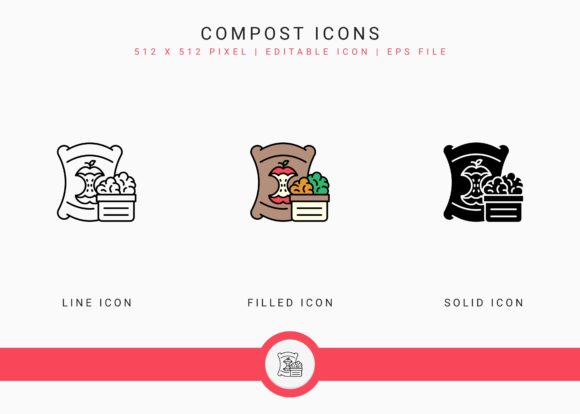
This collection falls squarely into the Graphics category, specifically labeled as an icon set with a solid line style. It’s marketed toward web designers and UI developers, which initially made me wonder if it had any place in the hoop. But here is the thing: the aesthetic of clean, minimal, bio-degradable concepts translates surprisingly well to modern handmade product lines. If you are an Etsy seller or a small shop product owner looking to tap into the sustainable living trend, this might be exactly what your brand needs. Let’s break down how the Compost Icons Set actually performs when we move it from screen to thread.
First Impressions and Visual Personality
The moment you isolate the vectors, the mood is immediately clear. This isn’t about ornate florals or heavy, dense fill stitches that scream "traditional cottage core." Instead, the Compost Icons Set offers a crisp, modern, and slightly industrial feel. The solid icon line style suggests a graphic tee vibe rather than a delicate heirloom piece. It feels organized, educational, and clean.
For a custom apparel decorator, this visual personality is gold. It works perfectly for brands that want to communicate eco-consciousness without being overly sentimental. The shapes are distinct enough to be recognized even when simplified by thread. When I imagine this on a garment, I see bold, confident statements rather than whisper-quiet details. It creates a visual appeal that says, "I care about the planet, and I have good taste."
Real-Life Project Scenarios
Let’s talk about where this design actually lives. I recently imagined using these icons for a batch of custom embroidered tote bag design items for a local farmers' market pop-up. The concept? A reusable produce bag series featuring individual compost icons for different materials—paper, food scraps, yard waste.
On a sturdy canvas tote, the running stitch outlines of these icons would pop beautifully against a natural linen or a deep forest green background. The simplicity of the line art means you don’t need complex color changes. You could execute this entire design in a single thread color, perhaps a bright white or a contrasting mustard yellow, making the production time fast and the cost low. This efficiency is crucial for craft business owners who need to maintain healthy profit margins.
Beyond totes, I see this working exceptionally well for kitchen towel embroidery. Imagine a set of three towels: one for general waste, one for recycling, and one for compost. Placing a single, clean icon from the Compost Icons Set in the corner of each towel adds a touch of professionalism and utility. It turns a basic household item into a curated, personalized gift that aligns with modern kitchen aesthetics. It also fits seamlessly into nursery decor or baby clothes for parents who want to teach sustainability early, keeping the look gender-neutral and modern.
Performance in Stitching and Fabric Contexts
When evaluating an embroidery project, the devil is always in the details. The Compost Icons Set relies on line work, which generally plays nice with machine embroidery. Line-based designs typically require less stabilizer support than large fill areas, reducing the risk of puckering on lightweight fabrics. However, because these are icons, they often feature small, enclosed spaces or thin lines.
If you are planning to use this for sweatshirt embroidery or heavy cotton blends, you will likely rely on a combination of satin stitch for the borders and perhaps a light fill stitch if the icon has a solid center. The key here is stitch density. Because the original is a vector illustration, you must ensure your digitizing software (or the pre-digitized file) doesn’t overcrowd the lines. If the lines are too close together, they will merge into a blob. If they are too far apart, the design will look sparse and unfinished.
I also considered using these for embroidered patch applications. Patches are a huge market for creative entrepreneurs. A small, square patch featuring one of these compost icons, finished with a satin border, would sell well on platforms like Etsy. The isolated background mentioned in the product description makes it easy to add a clean edge without worrying about clipping stray pixels from the original vector.
Where to Exercise Caution
No design is perfect for every surface. There are specific situations where the Compost Icons Set might struggle. First, avoid placing these on highly textured fabrics like chunky waffle knits or bouclé. The uneven surface will distort the clean lines, making the icons look wobbly and unprofessional. Similarly, stretchy fabrics like spandex blends require a strong stabilizer and careful hooping; otherwise, the tension might pull the straight lines out of alignment.
Another area to watch is small hoop sizes. While the icons are simple, if you scale them down too much, you lose the character. Trying to fit a detailed compost icon into a 3x3 inch hoop might result in lost definition. It is better to let the design breathe. Also, be cautious with dark fabrics unless you are using high-contrast, thick threads. Thin lines can get lost on black or navy backgrounds if the thread count isn't high enough.
Finally, consider the end-use of the product. If you are making holiday embroidery gifts that will be washed frequently, ensure the design is anchored well. While line designs are generally durable, loose ends around intricate icon corners can snag over time. A good machine embroidery design should have clean start and stop points, but always inspect the code or the final test stitch-out.
Practical Designer Notes for Success
Before you commit to a full production run of commercial embroidery items, follow these practical steps to ensure the Compost Icons Set meets your quality standards:
- Test on Scrap Fabric: Always stitch a test version on the exact fabric you plan to use. This reveals how the fabric texture interacts with the thread.
- Check Thread Color Contrast: View your design in black and white mockups. If the contrast is low, the icon will disappear once stitched.
- Review Stitch Density: Ensure the digitized file isn’t too dense. Excessive stitching can make the fabric stiff and uncomfortable, especially on apparel.
- Confirm Hoop Size: Make sure the design dimensions fit comfortably within your machine’s hoop, leaving room for edge-to-edge stability.
- Inspect Small Details: Zoom in on the smallest parts of the icons. Are they legible? Will they stitch cleanly?
- Verify Licensing: Since this is a design asset originally intended for digital use, double-check the license terms before selling finished physical goods. Some vector packs allow commercial use for merch, while others do not.
Final Verdict
The Compost Icons Set is a versatile, modern addition to any embroidery file library. It bridges the gap between digital UI design and tangible handmade goods. It is best suited for projects that value clarity, modern aesthetics, and sustainability themes. Whether you are creating printable mockups for online listings or stitching actual finished products for boutique clients, this set offers a clean, professional look that resonates with today’s conscious consumer. Just remember: good design starts with a good test stitch. Treat it right, and it will serve your brand consistency and buyer engagement goals well.